Benefits of Using FRP Gyratory Screening Machines in Corrosive Environments
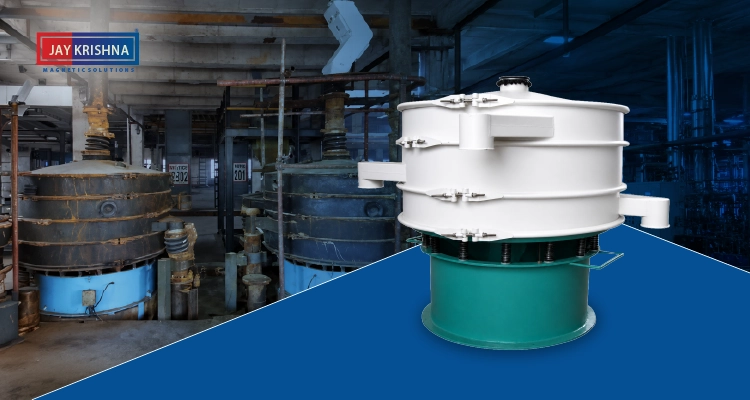
Corrosion does not only damage a screening machine. It slows production, contaminates material, increases maintenance calls, and forces teams to plan shutdowns before the process is ready.
This becomes a bigger concern in plants that handle acids, alkalis, salts, fertilizers, pigments, chemicals, minerals, wastewater solids, or humid process materials. A standard mild steel body may work well in dry, non-corrosive service, but it can struggle when fumes, moisture, and reactive powders are part of the daily environment.
An FRP gyratory screening machine is designed to solve this specific problem. It combines the separation accuracy of a gyratory or circular vibro screen with a Fiber-Reinforced Polymer construction that can be selected for corrosive-duty applications.
This guide explains where FRP screening machines make sense, what benefits they offer, how they compare with stainless steel and mild steel screens, and what details plant teams should check before finalizing a machine.
Key Takeaways
- Corrosion control comes first: FRP gyratory screening machines are useful when acids, alkalis, salts, fumes, moisture, or chemical powders can attack conventional metal construction.
- FRP is not ordinary plastic: It is a reinforced composite made with fibers, resin, and additives selected for strength, durability, and chemical resistance.
- Screening quality improves: A stable gyratory motion helps classify particles, remove oversize, separate solids from liquids, and support cleaner downstream processing.
- Maintenance pressure reduces: FRP can reduce rust-related body repairs, coating failures, corrosion cleaning, and unplanned downtime in suitable applications.
- Material compatibility is essential: FRP is highly useful in corrosive service, but the resin system must match the chemical, temperature, concentration, and cleaning method.
- FRP is not always the answer: Stainless steel may still be better for very high-temperature, high-abrasion, sanitary, or solvent-heavy applications.
- Customization matters: Deck count, mesh size, inlet/outlet position, cover design, motor protection, gaskets, and discharge layout should match the plant process.
- Manufacturer input saves cost: Sharing material details, capacity, particle size, corrosion exposure, and site layout helps avoid wrong specifications and premature wear.
What makes corrosive environments difficult for screening machines?
Corrosive environments create screening problems because the machine is exposed to moisture, fumes, acids, alkalis, salts, or reactive powders while also handling vibration, abrasion, and continuous material flow. If construction material is not selected correctly, the screen body, fasteners, covers, discharge points, and support areas can start degrading faster than expected.
In many chemical and mineral plants, the issue is not one single chemical. It is a combination of humidity, dust, washdown water, spilled material, and trapped fines around joints or corners. That is where corrosion often starts.
Once corrosion begins, the impact moves beyond appearance. Operators may notice rough surfaces, rust flakes, difficult cleaning, loose fittings, product discoloration, reduced sealing, or more frequent screen stoppages. In critical processes, even small contamination risks can affect product quality.
The right screening machine should therefore be selected as a process asset, not just a fabrication item. The question is not only, “Can it screen the material?” The better question is, “Can it screen this material every day in this atmosphere without becoming a maintenance problem?”
What is an FRP gyratory screening machine?
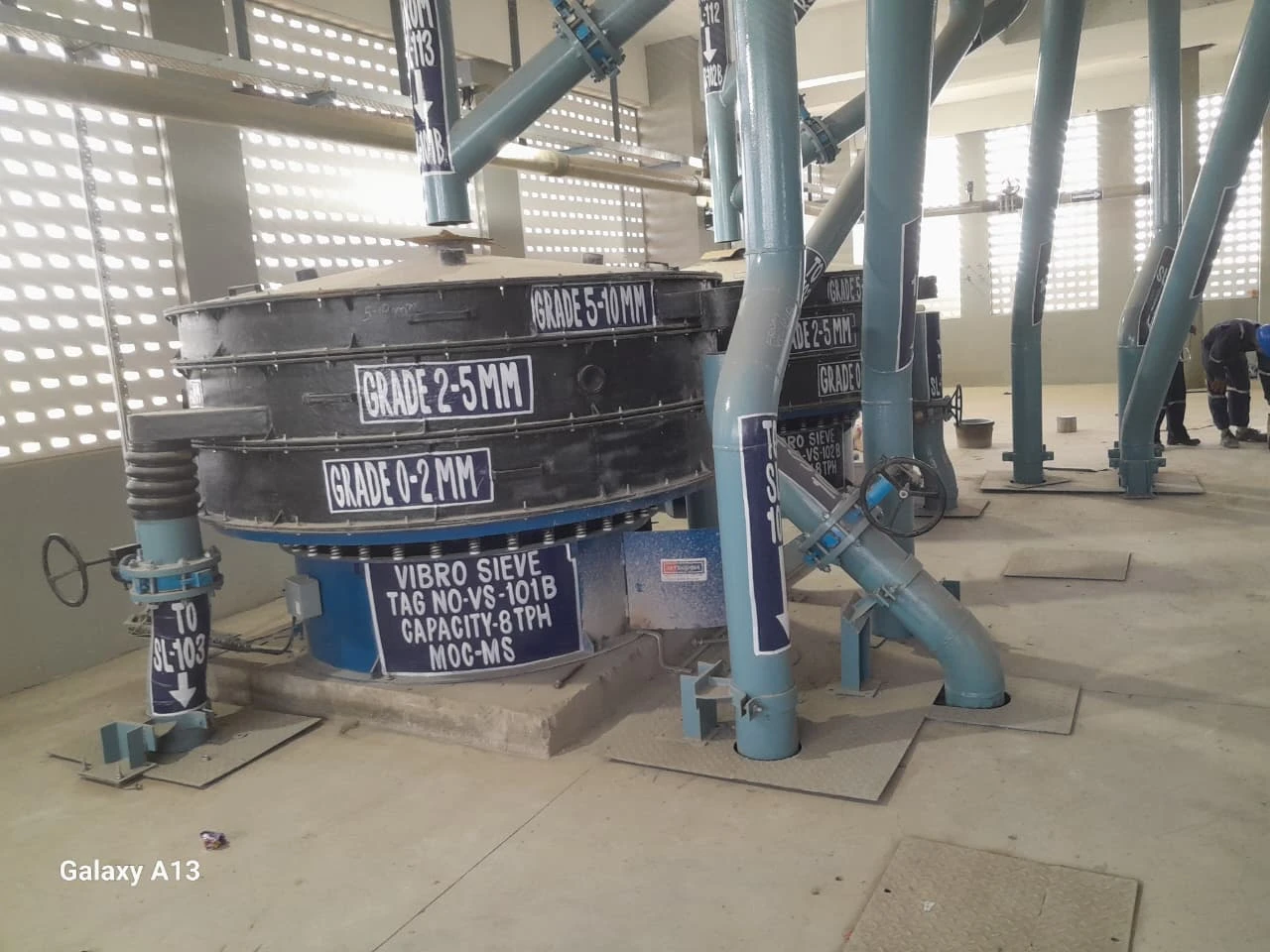
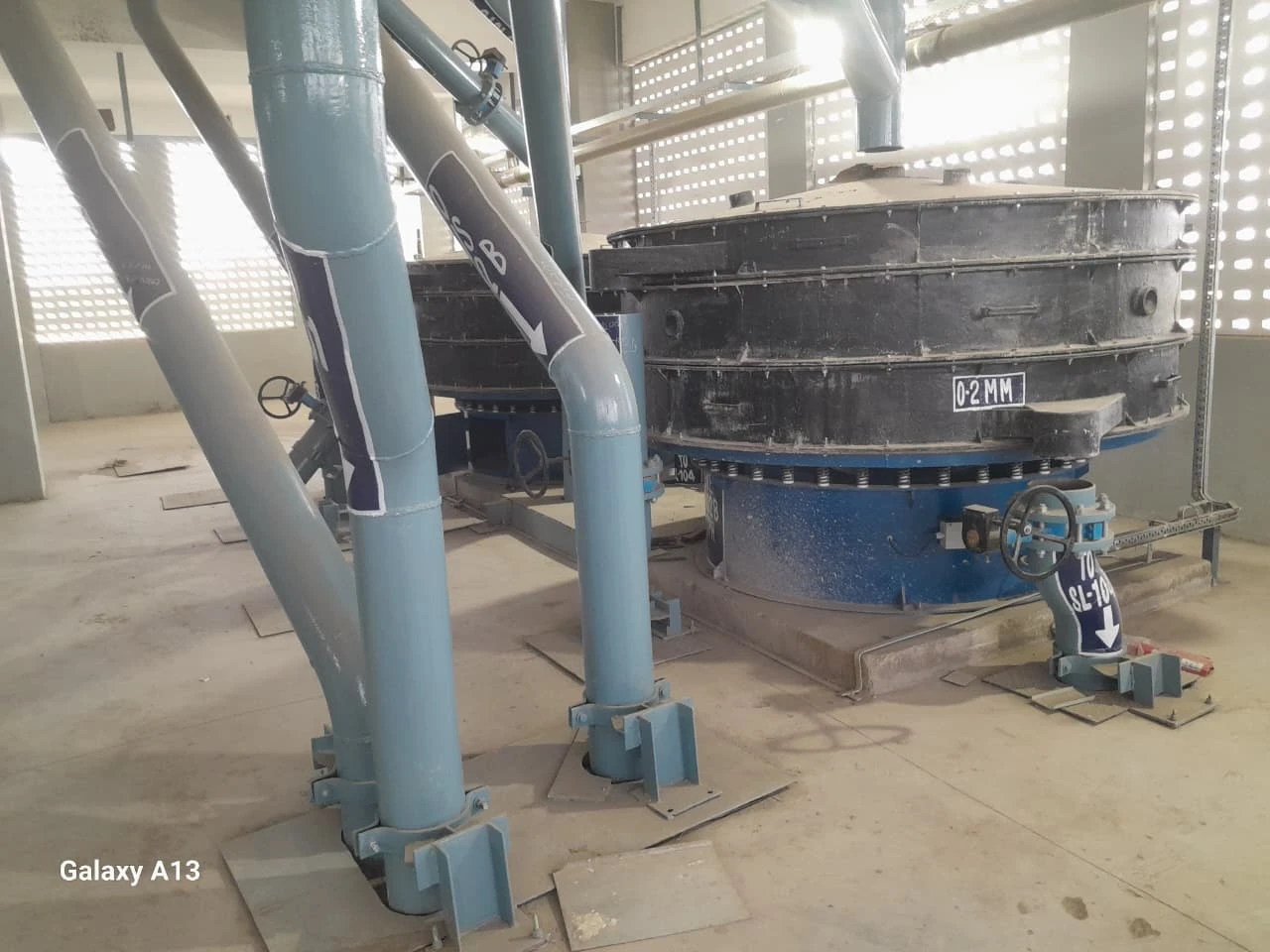
An FRP gyratory screening machine is a circular or gyratory vibro screen built with fiberglass-reinforced plastic in selected areas to improve resistance against corrosive materials and plant environments. It separates powders, granules, liquids, or slurries by particle size while reducing the risk of rust-related machine damage.
FRP is an engineered composite made with reinforcement fibers, polymer resin, and additives. In simple terms, the fiber gives strength, while the resin system helps protect against environmental and chemical attacks. This is why FRP is widely considered for corrosive industrial uses where bare or painted metal may need frequent repair.
The screening action is produced by a vibratory motor that creates a controlled gyratory motion. Material fed at the center spreads across the screen mesh. Fine particles pass through the mesh opening, while oversizing material moves toward the discharge outlet.
Depending on the process, the machine can be designed for scalping, grading, de-dusting, solid-liquid separation, or oversize removal. In corrosive service, the goal is to protect the screening body while maintaining stable separation performance.
How does the gyratory screening motion help?
Gyratory motion helps material travel across the mesh in a controlled circular path. This gives particles more useful contact with the screen area, which can improve separation consistency and reduce uneven loading compared with poorly distributed feed.
For powders and granules, this can help remove lumps, oversize, or foreign particles. For wet material or slurry, it can help separate solids from liquids when the mesh, angle, flow rate, and discharge design are selected correctly.
| Construction Option | Best Suited For | Main Advantage | Watch Point |
|---|---|---|---|
| Mild Steel or Painted Steel | Dry, non-corrosive materials and general industrial screening | Lower initial cost and easy fabrication | Paint or coating can fail in corrosive or washdown environments |
| Stainless Steel 304/316 | Food, pharma, hygiene-sensitive, wet, or moderately corrosive applications | Good cleanability and strong industrial acceptance | Higher cost; grade must match chemical exposure |
| FRP Construction | Chemical, salt, fertilizer, acidic, alkaline, humid, or fume-heavy environments | Strong corrosion resistance and lower rust-related maintenance | Resin compatibility, temperature, abrasion, and structural design must be checked |
Note: Final construction should be selected after checking the exact material, chemical concentration, operating temperature, cleaning method, and production duty.
Bottom Line: FRP is most valuable when corrosion risk is high, and the process does not demand a metal-only sanitary or high-temperature construction.
What are the biggest benefits of FRP gyratory screening machines?
The biggest benefits of FRP gyratory screening machines are corrosion resistance, cleaner material handling, lower rust-related maintenance, longer usable body life, reduced downtime, and better suitability for harsh chemical surroundings. These benefits are strongest when the machine is designed around the actual material and operating environment.
FRP is often selected in chemical processing because it can resist aggressive environments better than many conventional materials when the resin system is chosen correctly. In screening equipment, that advantage becomes practical because the machine body is repeatedly exposed to material flow, dust, moisture, and cleaning activity.
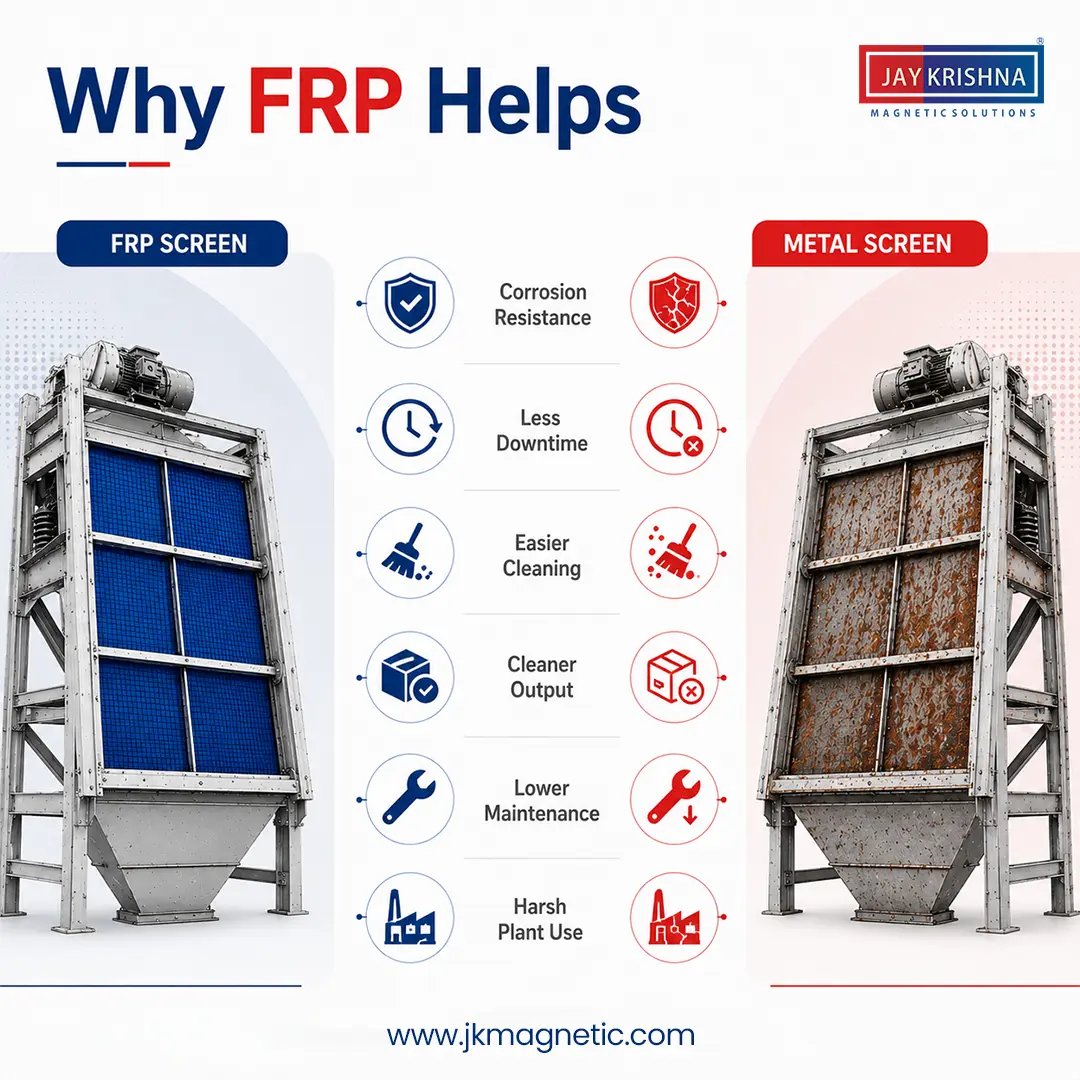
- Better corrosion resistance: FRP can reduce rusting, pitting, and coating failure in acidic, alkaline, salty, or humid screening areas.
- Lower contamination risk: A corrosion-resistant body reduces the chance of rust flakes or degraded coating entering the product stream.
- Reduced maintenance work: Plants spend less time repainting, cleaning corrosion, or replacing body sections damaged by chemical exposure.
- Longer service confidence: When the correct resin and design are selected, FRP can offer reliable life in aggressive environments.
- Improved handling comfort: FRP is lighter than many metal constructions, which can make covers, inspection access, and maintenance handling easier.
- Cleaner external appearance: Corrosion-resistant construction helps the machine stay cleaner in plants where equipment is exposed to fumes or salt-laden air.
- Customizable construction: FRP parts can be engineered around process geometry, discharge direction, cover design, and plant layout requirements.
The practical value is not only in the machine cost. It is in the avoided downtime. If one corrosion failure stops a line during a critical production run, the hidden cost can be much higher than the difference between standard and corrosion-resistant construction.
Which industries get the most value from FRP screening machines?
Industries handling corrosive powders, salts, wet chemicals, acidic or alkaline materials, fumes, wastewater solids, and humid process streams get the most value from FRP screening machines. Chemical, fertilizer, pigment, salt, mineral, wastewater, plastic additive, and selected food ingredient plants often consider FRP when metal corrosion becomes a recurring issue.
The right fit depends on what touches the screen, what surrounds it, and how the machine is cleaned. A dry but aggressive powder can be just as damaging as a wet slurry if it traps moisture around joints, covers, or discharge areas.
| Industry or Process | Common Corrosive Challenge | How FRP Helps | Typical Screening Purpose |
|---|---|---|---|
| Chemical Powders | Acids, alkalis, reactive dust, fumes, and washdown exposure | Reduces body corrosion and coating failure | Scalping, grading, de-lumping, or oversize removal |
| Fertilizer Plants | Salt content, hygroscopic material, humidity, and dust | Limits rust risk around covers and discharge zones | Particle classification and lump removal |
| Salt and Marine Material Handling | Chloride-rich material and humid air | Improves resistance compared with painted steel | Grading and foreign particle removal |
| Dyes, Pigments, and Additives | Color contamination, staining, and chemical residues | Supports cleaner body surfaces when designed correctly | Fine powder screening and quality control |
| Wastewater and Effluent Solids | Moisture, sludge, chemical exposure, and odor zones | Helps protect non-product-contact body areas | Solid-liquid separation and coarse removal |
| Mineral and Specialty Processing | Wet feed, chemical reagents, and abrasive fines | Useful where corrosion risk is high and abrasion is controlled | Sizing, classification, and process protection |
Note: Abrasion and temperature must be checked separately. A material can be corrosive and abrasive at the same time, which may require special liners, mesh selection, or design changes.
Bottom Line: FRP is strongest when corrosion is the main failure mode; it should be engineered carefully when abrasion, heat, or heavy impact are also present.
How does FRP improve screening reliability and maintenance?
FRP improves reliability by reducing corrosion-related surface damage, rust buildup, coating breakdown, and body deterioration in suitable environments. This helps maintenance teams focus on normal screening wear items, such as mesh, gaskets, clamps, motor checks, and cleaning, instead of repeatedly repairing corrosion damage.
A screening machine still needs routine attention. FRP does not remove the need for inspection. It changes the maintenance priority from corrosion rescue to planned process care.
For example, teams should still check mesh tension, screen blinding, gasket condition, clamp tightness, motor mounting, outlet blockage, and feed distribution. These details decide screening performance regardless of body material.
Where FRP helps most is around the structural and exposed surfaces. If a painted steel body needs frequent repainting or rust cleaning, FRP construction may reduce that cycle and keep the equipment more stable between planned maintenance windows.
- Fewer rust-related shutdowns in corrosive service
- Less need for repeated protective coating repair
- Cleaner machine body around discharge and cover areas
- Reduced risk of corrosion flakes entering product flow
- Better long-term appearance in humid or chemical surroundings
- More predictable maintenance planning when compatibility is correct
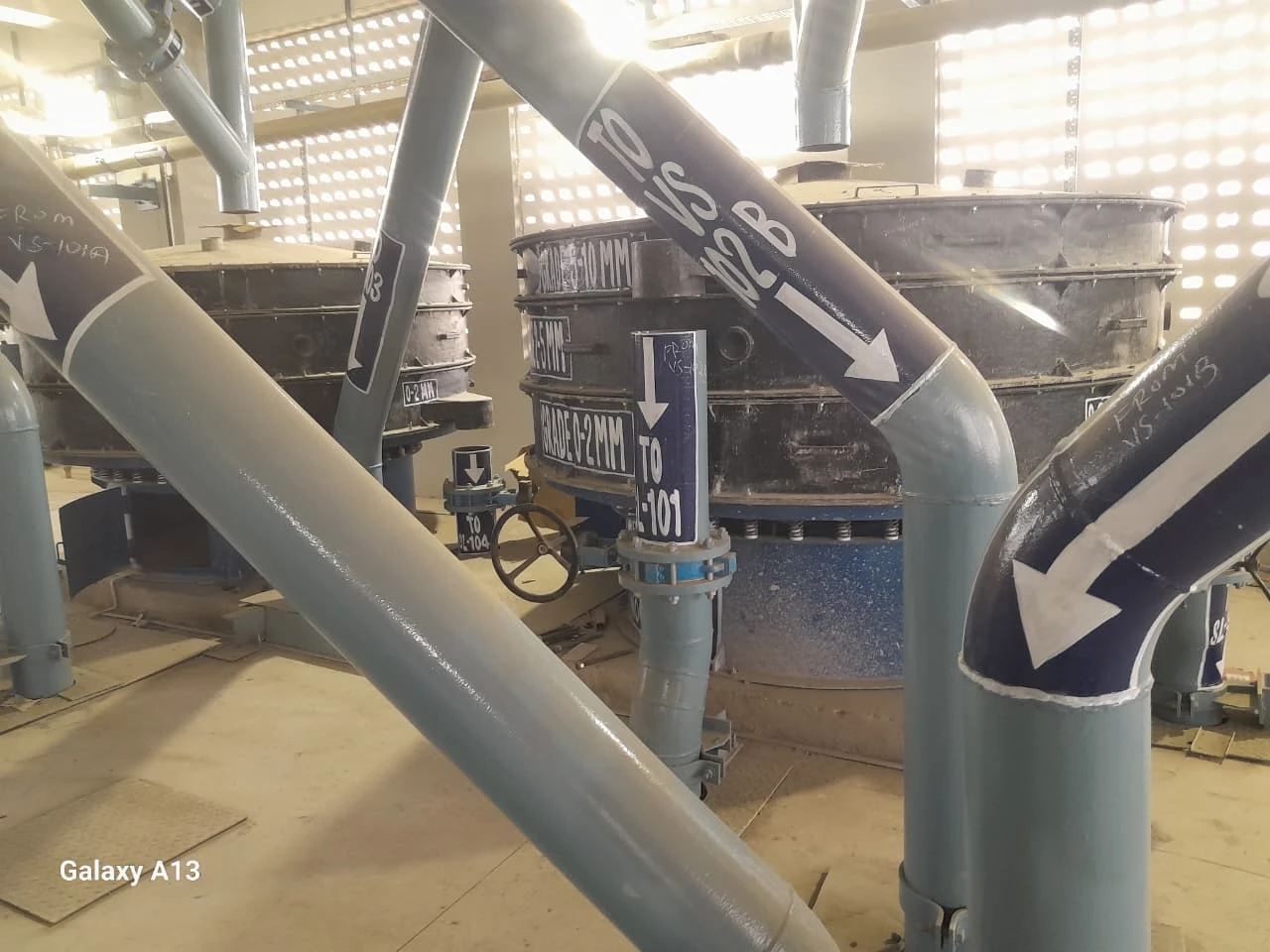
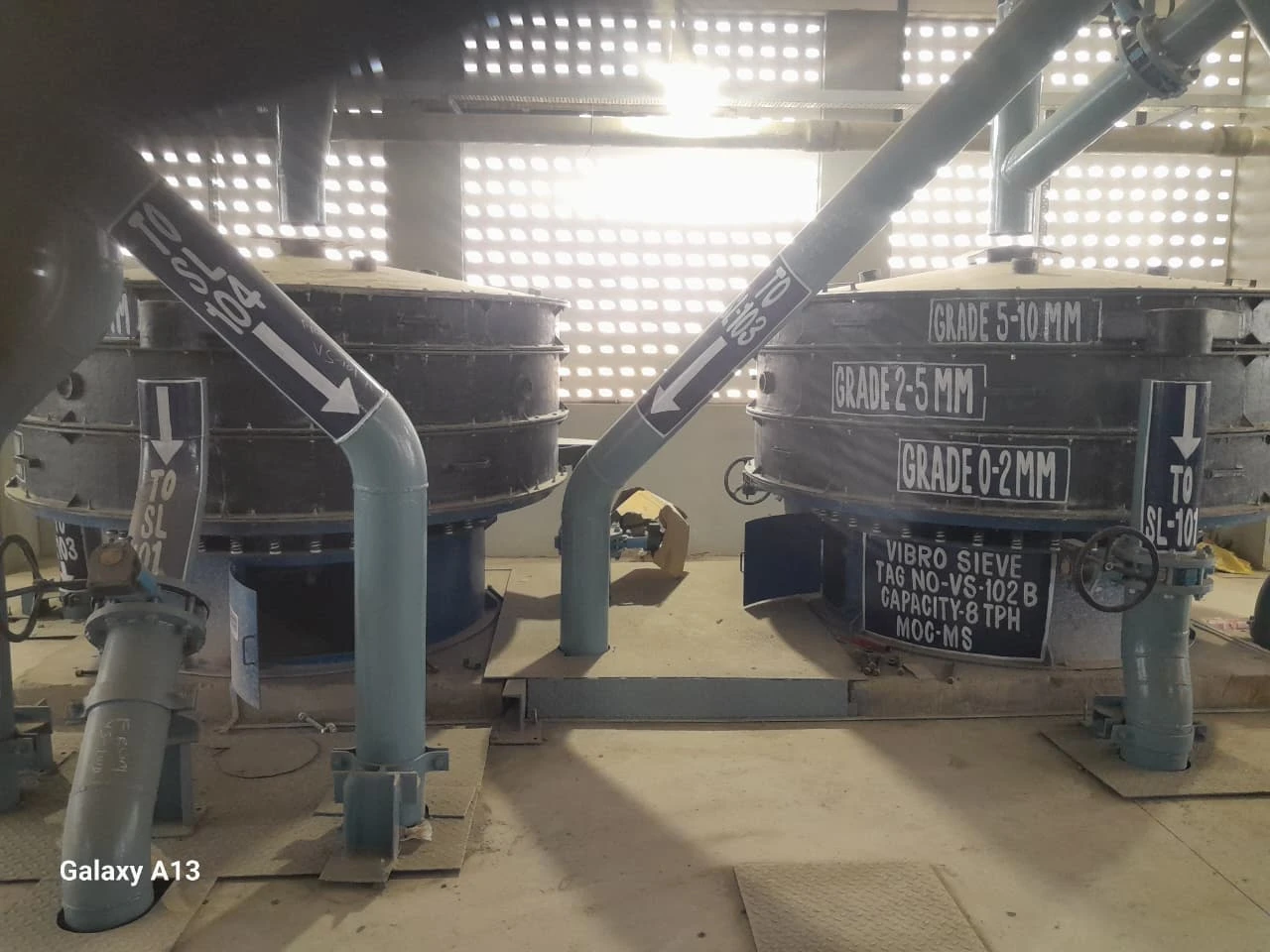
When should you choose FRP instead of stainless steel or mild steel?
Choose FRP when corrosion resistance is the main design priority, and the screened material is compatible with the selected resin system. Choose stainless steel when hygiene, high washdown standards, heat, or food/pharma compliance are more important. Choose mild steel when the material is dry, non-corrosive, and cost control is the main concern.
A common mistake is treating FRP as a universal replacement for every metal screen. It is not. FRP is a smart option when the application matches its strengths. If the material is highly abrasive, very hot, solvent-heavy, or handled under strict metal-contact requirements, stainless steel or a hybrid design may be more suitable.
A practical selection should review the full working condition: chemical name, concentration, temperature, particle size, moisture, bulk density, abrasive nature, cleaning method, and whether the machine needs to meet hygiene or regulatory expectations.
| Selection Question | Why It Matters | FRP Suitability Signal |
|---|---|---|
| Is the material acidic, alkaline, salty, or fume-generating? | This defines the corrosion load on the machine body. | Strong signal for FRP if resin compatibility is confirmed. |
| Is the product highly abrasive? | Abrasion can wear surfaces even when corrosion resistance is good. | May need liners, special mesh, or another construction. |
| What is the operating temperature? | Resin systems have temperature limits. | Suitable only within the selected FRP grade limit. |
| Is the plant using aggressive cleaning chemicals? | Cleaning agents can be as important as the screened material. | Check chemical compatibility before approval. |
| Is the process food, pharma, or GMP-sensitive? | Surface finish, cleanability, and documentation may be critical. | Stainless steel or hybrid design may be preferred. |
| What capacity and particle size are required? | Screen diameter, deck count, and mesh must match throughput. | FRP body can help only if the screening design is correct. |
Note: FRP selection should always include chemical compatibility reviews. Do not rely only on a generic “corrosion-resistant” label.
Bottom Line: FRP is a strong choice for corrosive screening, but the final decision should balance corrosion, abrasion, hygiene, temperature, capacity, and cleaning needs.
What design features matter in an FRP gyratory screening machine?
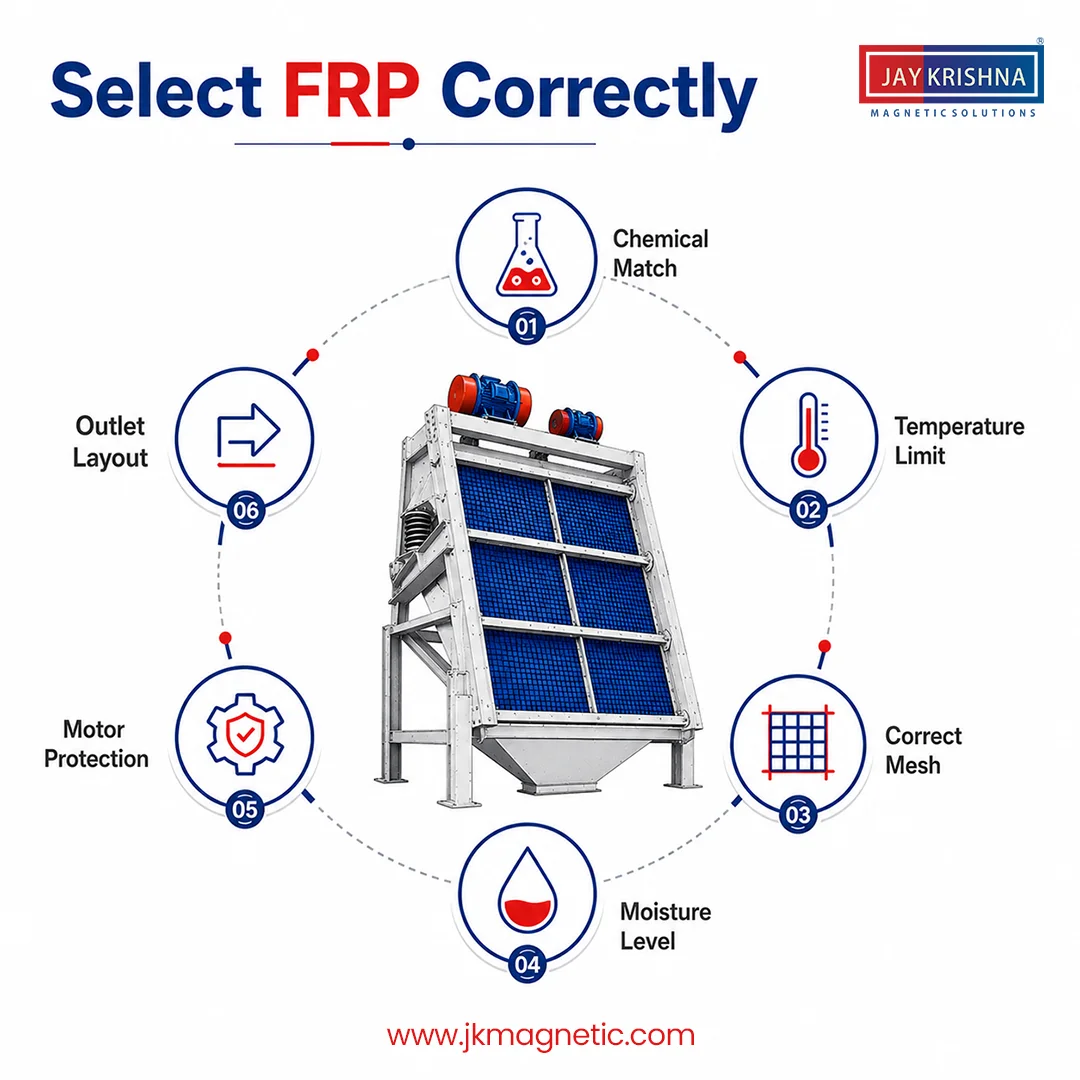
The most important design features are the FRP resin system, screen diameter, deck count, mesh size, dust cover, sealing arrangement, discharge direction, motor protection, frame support, cleaning access, and integration with upstream or downstream equipment. In corrosive plants, small design details often decide machine life.
For dry powders, dust-tight covers and proper sealing reduce airborne material and help protect operators. For wet or slurry applications, outlet design and drainage become more important. For multi-size classification, double or triple deck construction may be required.
Feed control also matters. If material is dumped unevenly, even a strong screen can underperform. A controlled feeder, chute, or inlet design helps spread material across the mesh and improves screening efficiency.
Many plants also combine screening with magnetic separation. For example, a drawer magnet or magnetic separator after a vibro screen can help remove ferrous particles from screened products in industries where metal contamination is a concern.
-
- Deck configuration: Single deck for simple scalping; double or triple deck for multiple separations.
- Mesh selection: Must match particle size, throughput, moisture, and blinding risk.
- Dust cover: Useful when powder creates fumes, airborne dust, or housekeeping issues.
Discharge direction: Should match plant layout and downstream equipment.
- Motor protection: Electrical and mechanical parts need suitable protection from corrosive atmosphere.
- Access design: Quick cleaning and inspection reduce maintenance time.
What mistakes should plants avoid when specifying FRP screens?
Plants should avoid specifying FRP screens without checking chemical compatibility, temperature, abrasion, mesh size, capacity, cleaning method, and discharge layout. Most performance problems happen when the machine is selected from a catalog description instead of the actual process conditions.
The first mistake is assuming all FRP is the same. Different resin systems behave differently against acids, alkalis, solvents, salts, and temperature.
The second mistake is ignoring abrasion. Corrosion resistance does not automatically mean high wear resistance against sharp minerals or hard granules.
The third mistake is under sizing the screen. If the required throughput is higher than the useful screen area, operators may increase feed too much, which causes poor separation, blinding, overflow, and product loss.
The fourth mistake is treating cleaning as an afterthought. If covers, clamps, gaskets, and outlets are difficult to access, the plant may lose the maintenance benefit that FRP was supposed to provide.
- Do not select FRP without chemical and temperature details.
- Do not ignore abrasive wear just because corrosion is the main concern.
- Do not choose mesh size only from desired output size; check flow behavior too.
- Do not overload the screen beyond practical capacity.
- Do not forget sealing, covers, gaskets, and outlet direction.
- Do not place electrical parts where fumes or splashes can damage them.
- Do not skip spare mesh and wear-part planning.
Why choose Jaykrishna Magnetic Pvt. Ltd. for FRP gyratory screening applications?
JK Magnetic is useful for FRP gyratory screening applications because the company understands both separation performance and plant-level equipment design. Since 1978, Jaykrishna Magnetics Pvt. Ltd. has manufactured magnetic separators, vibratory equipment, electromagnetic equipment, mineral processing equipment, and recycling solutions for Indian and global industries.
For corrosive screening environments, this experience matters because the machine must do more than resist chemicals. It must separate accurately, handle the required capacity, fit into the plant layout, and remain serviceable for maintenance teams.
JK Magnetic manufactures circular / gyrator vibro screens for solid and liquid separation, oversize removal, grading, and particle-size separation. The company also supports single, double, and triple deck configurations with dust-cover options, helping plants match machine design to actual process needs.
That practical engineering approach is important in corrosive-duty applications. A good specification should consider material behavior, corrosion exposure, screen mesh, deck arrangement, discharge point, motor selection, and integration with feeders or magnetic separation equipment.
Conclusion
FRP gyratory screening machines are valuable when corrosion is affecting screening performance, equipment life, cleaning, and maintenance reliability. They are especially useful in plants that handle chemicals, salts, fertilizers, acidic or alkaline materials, wastewater solids, humid powders, or corrosive fumes.
The real benefit comes from matching the machine to the process. FRP construction can reduce rust-related problems, but deck count, mesh size, capacity, feed control, motor protection, gasket selection, cleaning access, and discharge layout still decide how well the screen performs.
For the best result, treat FRP screening as an engineered selection, not a generic upgrade. Share the full process details with the manufacturer before finalizing the machine.
Ready to specify an FRP gyratory screening machine for a corrosive plant? Contact JK Magnetic engineers for application guidance
Frequently Asked Questions (FAQs)
1. When is an FRP gyratory screening machine better than stainless steel?
FRP is usually better when corrosion from acids, alkalis, salts, fumes, or humidity is the main concern and the material is chemically compatible with the resin. Stainless steel may still be better for high-temperature, sanitary, food-grade, or highly abrasive applications.
2. Can FRP gyratory screens handle acids and alkalis?
Yes, FRP can handle many acidic and alkaline environments when the correct resin system is selected. The exact chemical name, concentration, temperature, and cleaning method must be reviewed before finalizing the construction.
3. Does FRP reduce contamination risk in screened products?
FRP can reduce contamination risk caused by rust flakes, peeling coatings, or corroded metal surfaces. It does not replace proper cleaning, sealing, mesh selection, or process hygiene, but it can support cleaner operation in corrosive service.
4. Is an FRP screen suitable for food or pharmaceutical processing?
It depends on the product-contact requirements, cleaning methods, and compliance expectations. Many food and pharma applications prefer stainless steel for hygiene and documentation, but FRP may be considered non-contact or corrosive surrounding areas after review.
5. How do I choose the right mesh size for corrosive materials?
Start with the desired cut size, particle distribution, moisture, flow behavior, and blinding risk. Corrosive material may also need compatible mesh, gaskets, and screen support parts, not only an FRP body.
6. What maintenance does an FRP gyratory screening machine need?
Routine maintenance includes checking mesh condition, gaskets, clamps, motor mounting, feed distribution, outlet blockage, and cleaning access. FRP can reduce corrosion-related repair, but normal screening wear and inspection are still required.
7. Can FRP gyratory screens be customized for plant layout?
Yes, FRP gyratory screens can often be customized for diameter, deck count, cover, inlet height, outlet direction, mesh type, sealing, and integration with other equipment. Sharing layout drawings helps the manufacturer design a better fit.
8. What details should I share before buying an FRP screening machine?
Share the material name, chemical exposure, temperature, moisture, particle size, bulk density, capacity, screening goal, cleaning method, and plant layout. These details help avoid wrong construction, undersized screens, and avoidable maintenance issues.