How Eddy Current Separators Improve Metal Removal in Paper Recycling
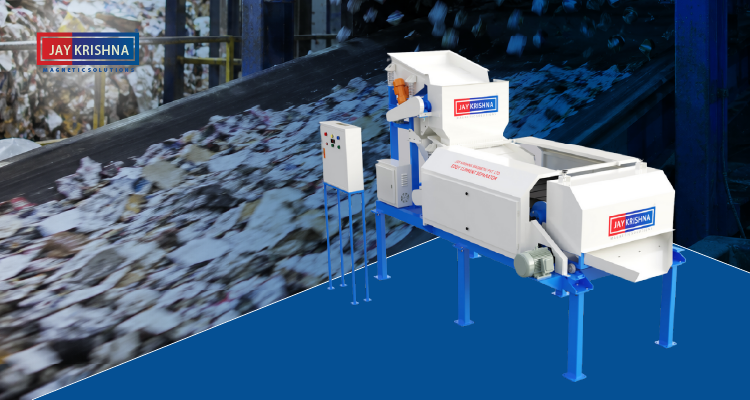
Wastepaper bales rarely arrive clean. Staples, paper clips, baling wire, and the occasional stray nail travel in with the load, and if that ferrous metal reaches the pulper, it can nick blades, jam screens, and force an unplanned shutdown. Less obvious is the non-ferrous metal riding along with it: liberated aluminum fragments from beverage cartons, aluminum caps and closures, and copper wire strands that a standard magnet simply cannot catch because they are not magnetic.
This is where an eddy current separator earns its place in a paper recycling line. It does not attract non-ferrous metal the way a magnet attracts steel. Instead, a rapidly changing magnetic field induces current inside conductive particles such as aluminum and copper, creating a repelling force that changes their discharge path. This guide explains how that mechanism works, where the separator fits relative to pulping and shredding, and what a plant manager or process engineer should check before specifying a unit.
Key Takeaways
- Two Contamination Problems, Two Different Fixes: Ferrous metal (staples, wire, clips) is removed by magnetic attraction, while non-ferrous metal (aluminum foil, copper wire, brass fittings) needs eddy current separation because it will not stick to a magnet.
- Pulper Rejects Carry More Metal Than They Look Like They Should: Pulper braids can contain a substantial share of metal wire mixed with plastic, fiber, and other contaminants; WEIMA notes that pulper braids can consist of up to 50% metal wires.
- The Mechanism Is Repulsion, Not Attraction: A high-speed rotor with alternating magnetic poles induces eddy currents in conductive metal, and those currents generate an opposing field that physically ejects the metal off the belt, while paper and plastic simply fall by gravity.
- Aluminum Separates More Easily Than Many Common Non-Ferrous Metals: Aluminum has a high electrical-conductivity-to-density ratio, which helps it respond strongly to eddy current separation when the metal is sufficiently liberated from attached paper, plastic, or other material.
- Composite Packaging Is a Known Complication: Beverage cartons that combine paper, plastic, and a thin aluminum foil layer are difficult to separate cleanly into single-material streams, which is part of why reject-stream processing exists in the first place.
- Placement in the Line Matters: Eddy current separation typically comes after ferrous magnetic separation and after shredding has liberated metal fragments from bulkier waste, not before it.
- Recovery Depends on Particle Size and Liberation: Eddy current separation performs most consistently when conductive particles are sufficiently liberated and properly presented. JayKrishna Magnetics states that its Eddy Current Separator can sort particles down to about 2 mm in diameter, although actual recovery depends on the material and operating conditions.
- This Protects the Reject Stream’s Value, Not Just the Fiber’s: Recovering non-ferrous metal from a paper mill’s residual or reject fraction improves what can be sold as scrap and reduces the ash and metal content of whatever material is sent on as refuse-derived fuel or to landfill.
Why Metal Contamination Is a Recurring Problem in Paper Recycling
A paper mill or MRF paper line usually sees two contamination sources. Incidental metal includes staples, paper clips, baling wire, nails, and similar items that arrive with collected or baled paper.
The second source is structural. Beverage and food cartons can combine paperboard, plastic film, and a thin aluminum barrier layer. When these materials enter a mixed-paper or OCC stream, pulping or shredding does not automatically create clean single-material fractions. The aluminum may remain bonded to plastic or fiber, which makes composite packaging harder to process and can require additional liberation before non-ferrous separation.
In the pulper, most recoverable fiber breaks down and passes through screening. Long, stringy contaminants such as wire, film, and plastic strapping can become entangled on the ragger system and leave as a pulper braid, while other contaminants may exit through separate reject-removal stages. WEIMA notes that pulper braids can consist of up to 50% metal wires because wastepaper is commonly delivered in pressed bales secured with wire. That makes the reject stream more than simple waste: it can contain recoverable metal value.
Ferrous vs. Non-Ferrous: Two Different Removal Jobs
It helps to separate these two contamination types clearly, because they need two different pieces of equipment.
| Contamination Type | Typical Source in a Paper Line | How It’s Removed | Why a Magnet Alone Won’t Catch It |
|---|---|---|---|
| Ferrous metal | Staples, paper clips, baling wire, nails, screws | Overband, drum, or plate magnetic separator | N/A, this is exactly what a magnet is designed to catch |
| Non-ferrous metal | Liberated aluminum fragments from cartons, aluminum caps or closures, copper wire, brass fittings | Eddy current separator | Aluminum, copper, and brass are not magnetic, so they pass straight through a standard magnetic field untouched |
Ferrous separation should normally come first. An overband magnetic separator or drum-type unit removes wire, staples, and other steel before the remaining material reaches the eddy current separator. That recovers the ferrous fraction and helps protect the downstream eddy current belt and rotor from oversized steel objects. The remaining material can then move to non-ferrous recovery for aluminum and copper.
If your line is currently relying on a single magnetic separator to catch “all the metal” in a paper or reject stream, it’s worth having a conversation about what that magnet is actually missing. Jaykrishna Magnetics Pvt. Ltd. engineering team can walk through your material stream and identify where a non-ferrous gap exists. Let’s Discuss Your Requirements.
How an Eddy Current Separator Actually Pulls Metal Out of the Stream
An eddy current separator does not pull non-ferrous metal toward the rotor. It repels conductive particles away from their normal discharge path.
Inside the separator, a rotor built from magnet blocks uses ferrite ceramic or NdFeB rare-earth magnets depending on the application and spins at high speed inside a non-metallic drum shell. As conductive particles such as aluminum or copper move through the rapidly changing magnetic field, eddy currents are induced inside them. Those currents generate an opposing magnetic field that produces the repelling effect used for separation.
The two fields repel each other. That repulsion changes the conductive particle’s trajectory so it can be ejected over a splitter plate into a separate collection point, while paper, plastic, and other non-conductive material follow the normal belt-discharge path. Separation performance depends on rotor configuration, belt speed, splitter position, particle size, and how evenly the material is presented. JayKrishna Magnetics states that its Eddy Current Separator can sort particles down to about 2 mm in diameter, although actual recovery still depends on the feed material and operating conditions.
Mechanism → what it means → buyer outcome: the strength of repulsion depends on the particle’s conductivity, density, size, shape, and degree of liberation. Aluminum has a particularly favorable conductivity-to-density ratio compared with many common non-ferrous metals, so liberated aluminum fragments can respond strongly. Aluminum that remains bonded to plastic or other carton layers may need additional shredding or liberation before a clean separation is possible.
Where Eddy Current Separation Fits in a Paper Recycling or Reject-Handling Line
Placement depends on the process. In a typical single-stream material recovery facility, paper and cardboard are often removed earlier by size and shape, before the eddy current stage. The remaining residual stream can then pass through ferrous magnetic separation followed by non-ferrous recovery. This distinction matters because bulk paper does not normally need to pass through equipment intended for the residual metal-containing fraction.
For a paper mill specifically, eddy current separation is often more relevant downstream of the pulper in the reject-handling line. Pulper braid or rope reject is shredded to break apart the tangled material and liberate wire, plastic, and non-ferrous fragments. Ferrous wire can then be removed magnetically, while sufficiently liberated aluminum and copper can move to an eddy current separator for non-ferrous recovery.
The sequence matters because an eddy current separator needs reasonably liberated, well-presented particles. Unshredded rope reject that is still tangled with fiber and plastic will not separate cleanly.
If you’re evaluating non-ferrous recovery on a prepared dry stream or a reject-shredding line, JayKrishna Magnetics’ Eddy Current Separator can be assessed against your existing shredding, screening, conveying, and feed-preparation setup.
Selection Factors: What to Check Before Specifying a Unit
The right configuration depends on the reject stream. These factors have the greatest influence on practical recovery performance.
| Factor | Why It Matters | What to Check |
|---|---|---|
| Feed particle size | The separator needs individual metal fragments to be liberated, not bundled inside rope or fiber | Confirm shredder output size before the separator, not after |
| Metal type expected | Aluminum foil, copper wire, and brass respond differently based on conductivity and mass | Identify whether the target metal is mostly foil, wire, or mixed fittings |
| Moisture and pulp residue | Wet, fiber-coated fragments can behave inconsistently on the belt | Check whether material is dewatered or dried before the eddy current stage |
| Belt width and throughput | Undersized equipment for the reject volume reduces recovery consistency | Match belt width to your actual reject tonnage, not the whole line’s throughput |
| Rotor and magnet type | JayKrishna Magnetics lists ferrite ceramic and NdFeB rare-earth magnet configurations depending on the application | Confirm the rotor configuration against the target metal, particle characteristics, and feed conditions |
Every paper line’s reject stream looks a little different depending on the mix of cartons, wire ties, and packaging that comes through the pulper. JayKrishna Magnetics’ engineering team can review your material stream and recommend the right belt width and rotor configuration for it. Request a FREE Quote Today.
What Better Non-Ferrous Recovery Actually Delivers
The main benefits are practical: cleaner reject fractions, recoverable scrap, lower disposal burden, and less metal exposure in downstream processing.
- Equipment protection. Pre-pulper metal removal protects pulping and fiber-processing equipment. In a post-pulper reject line, an eddy current separator can reduce metal exposure in downstream reject conveyors, shredders, screens, and related equipment.
- Cleaner reject fractions. Removing metal makes pulper reject or MRF residual material more consistent for further processing, including refuse-derived fuel applications.
- Recoverable scrap value. Separated aluminum and copper can be recovered as scrap instead of remaining in the reject pile.
- Reduced disposal volume. Recovering usable metal also reduces the amount of material sent to disposal.
Real-World Application Context
Two applications are especially relevant in paper-recycling operations.
The first is pulper reject or braid processing. Rope-like waste extracted from the pulper is shredded to liberate wire, plastic, and other material fractions. Ferrous metal can then be removed magnetically, while sufficiently liberated aluminum and copper can be recovered in a later eddy current stage.
The second is mixed-paper or composite-carton residue processing, where liberated aluminum-containing fragments can be recovered before the remaining material is baled, used for energy recovery, or sent to disposal.
Why Jaykrishna Magnetics Pvt. Ltd. for Metal Recovery in Paper and Recycling Lines
Jaykrishna Magnetics Pvt. Ltd. has designed and manufactured magnetic separation and vibratory equipment in Ahmedabad, Gujarat, since 1978 and is now led by its second generation. Its Eddy Current Separator uses an eccentric rotor design and is offered across the published JECS-20 to JECS-60 model range with different belt widths and drive configurations. Jaykrishna Magnetics Pvt. Ltd. lists general non-ferrous recovery of around 97%, but actual performance on a paper-reject stream depends on particle size, liberation, feed consistency, and operating conditions. Expected recovery should therefore be confirmed against the facility’s own material rather than treated as a guaranteed figure.
Jaykrishna Magnetics Pvt. Ltd. also manufactures magnetic separators for the ferrous-removal stage and groups several relevant products within its Recycling Solutions offering. The combination is useful where a paper or reject-processing line needs both ferrous and non-ferrous separation. Belt width, rotor configuration, mounting, and line integration can then be discussed against the actual reject volume rather than treated as a fixed catalog choice.
Conclusion
Paper recycling has a metal-contamination problem that a single magnet cannot fully solve. Ferrous fragments such as staples and wire respond to magnetic attraction, while liberated aluminum, copper, and other conductive non-ferrous metals require eddy current separation. When the reject stream is properly shredded and the ferrous fraction is removed first, an eddy current separator can recover saleable non-ferrous metal, reduce metal in the residual fraction, and improve the value of material that would otherwise move toward RDF or disposal.
If your paper or reject-handling line is currently sending recoverable aluminum and copper straight to disposal, Jaykrishna Magnetics’ engineering team can help you evaluate where an eddy current separator would fit and what configuration your reject volume actually needs. Contact Us to start that conversation.
FAQs
1. What type of metal contamination is most common in paper recycling?
Ferrous contamination such as staples, paper clips, and baling wire is common because it can arrive with collected and baled paper. Non-ferrous contamination may include liberated aluminum-containing fragments, copper, or brass, which require a different separation method.
2. Can a magnetic separator handle metal contamination alone in a paper line?
No. Magnetic separators remove ferrous metal, while aluminum, copper, and brass require a separate non-ferrous recovery stage such as eddy current separation.
3. How does an eddy current separator tell aluminum foil apart from paper?
A rotating magnetic field induces eddy currents in sufficiently conductive particles such as liberated aluminum. Those currents create a repelling force that changes the metal’s discharge trajectory, while paper and most plastics do not respond in the same way and follow the normal material path.
4. Where should eddy current separation be placed in a paper mill’s reject line?
It generally belongs after ferrous separation and after shredding has liberated individual metal fragments. Unshredded, tangled reject material is difficult to separate cleanly.
5. Does moisture or leftover pulp residue affect eddy current separation?
Yes. Wet or fiber-coated fragments can behave less consistently on the belt than cleaner, drier material. Depending on the reject process, dewatering or drying ahead of the eddy current stage may improve feed presentation and separation consistency.
6. Can JayKrishna Magnetics customize an eddy current separator for a paper mill’s reject line?
JayKrishna Magnetics offers its Eddy Current Separator across a published model range and discusses configuration against the customer’s material stream. Belt width, throughput, rotor selection, and integration should be confirmed for the actual reject material, volume, and existing line layout.